Start writing here...
 If you run a fuel station in Kenya, you know the daily battle.
Shift sheets get lost. Attendants don't record meter readings properly. By the time you figure out how much fuel actually left the tanks versus what the pumps say you sold, there's a discrepancy and you can't tell if it's evaporation, meter calibration drift, or something more deliberate.
Then there's KRA. The eTIMS compliance deadline isn't a future problem it's here, and the penalties for non-compliance can shut you down.
A fuel station in Nairobi faced all of this. Six pumps, two underground tanks, multiple shifts per day, and a team of attendants who rotated frequently.
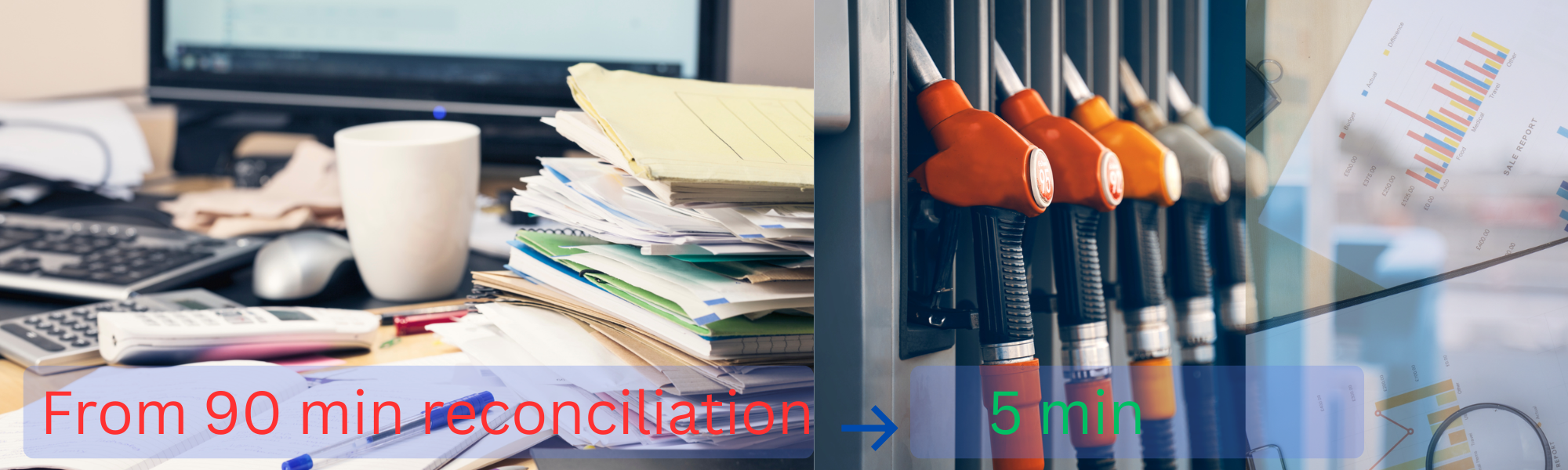
Reconciliation was taking 90 minutes per shift. By the time yesterday's numbers were ready, you were already three shifts behind.
That's when they brought in Zen Data Solutions.
The Challenge
1. Product Loss: The Silent Profit Killer
Fuel variance was running at approximately 3.5% per shift. At that rate, over the course of a month, the company was losing thousands of litres with no clear answer why. Was it meter drift? Theft? Evaporation? Manual recording errors? The data simply didn't exist to tell the story.
2. Shift Reconciliation : 90 Minutes of Manual Work
Every shift close required:
- Closing the pumps
- Collecting handwritten shift sheets from each attendant
- Transcribing meter readings and tank dip figures into Excel
- Manually computing expected vs actual sales
- Chasing down discrepancies with the attendant on duty
- Re-doing the math if anything didn't add up
A process that should take minutes was consuming an hour and a half per shift — and two shifts a day meant three hours of lost supervisory time.
3. KRA eTIMS Compliance
With the Kenya Revenue Authority's eTIMS (electronic Tax Invoice Management System) requirements tightening, the station needed every transaction fiscally documented — automatically. Manual invoice generation wasn't going to cut it.
4. Customer Credit: A Blind Spot
Like most fuel stations in Kenya, they operated on trust sales. Regular customers took fuel on credit. But tracking who owed what was a mental exercise — notebooks, manager memory, chasing down payments with no proper aging report.
The Solution: An Integrated Fuel Management System on Odoo
We deployed a comprehensive fuel station management system built on Odoo 17,18 and 19 integrated directly with the station's existing Forecourt Controller (FCC) (Currently Dover Fusion V2&3, PTS2, CYBOIL) — the actual hardware that manages the pumps at the forecourt.
Real-Time Pump-to-System Data Flow
Every nozzle transaction every litre of fuel dispensed — flows in real time from the FCC into the system. No manual entry. No transcription errors. The data is encrypted at the pump, decrypted by the system, and matched to the correct shift, pump, and nozzle automatically.
Automated Tank and Meter Management
Tank dip readings are recorded digitally through the ATG. Opening and closing volumes are tracked per sale. At day end system compares:
- What the meters say was dispensed
- What the tank dip says left the tank
- What was actually paid for
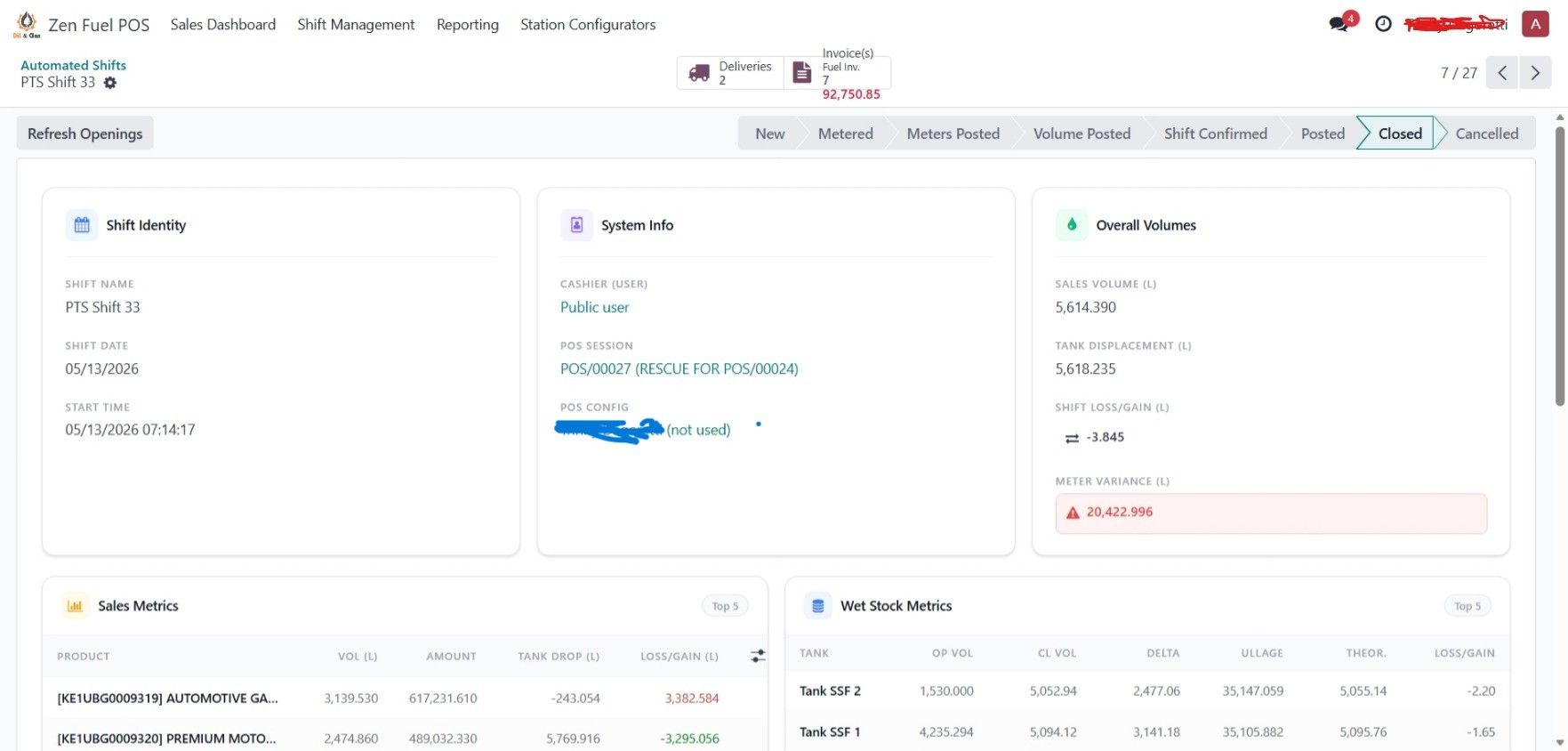
The difference? That's your variance calculated down to the litre, per shift, per tank, per nozzle.
Shift Reconciliation in 5 Minutes
The workflow is now:
- Attendant posts meter readings into the system
- Tank readings are posted (digital dip)
- Shift is confirmed: The system computes loss/gain automatically
- Shift is closed
Total time: 5 minutes.
The station manager doesn't transcribe, doesn't calculate, doesn't chase. The system does it all.
KRA eTIMS Compliance Built In
Every transaction generates fiscal documentation automatically. Invoices are created and posted directly to the accounting module. When KRA asks for records — they're ready. Organized. Audit-proof.
Customer Credit Management
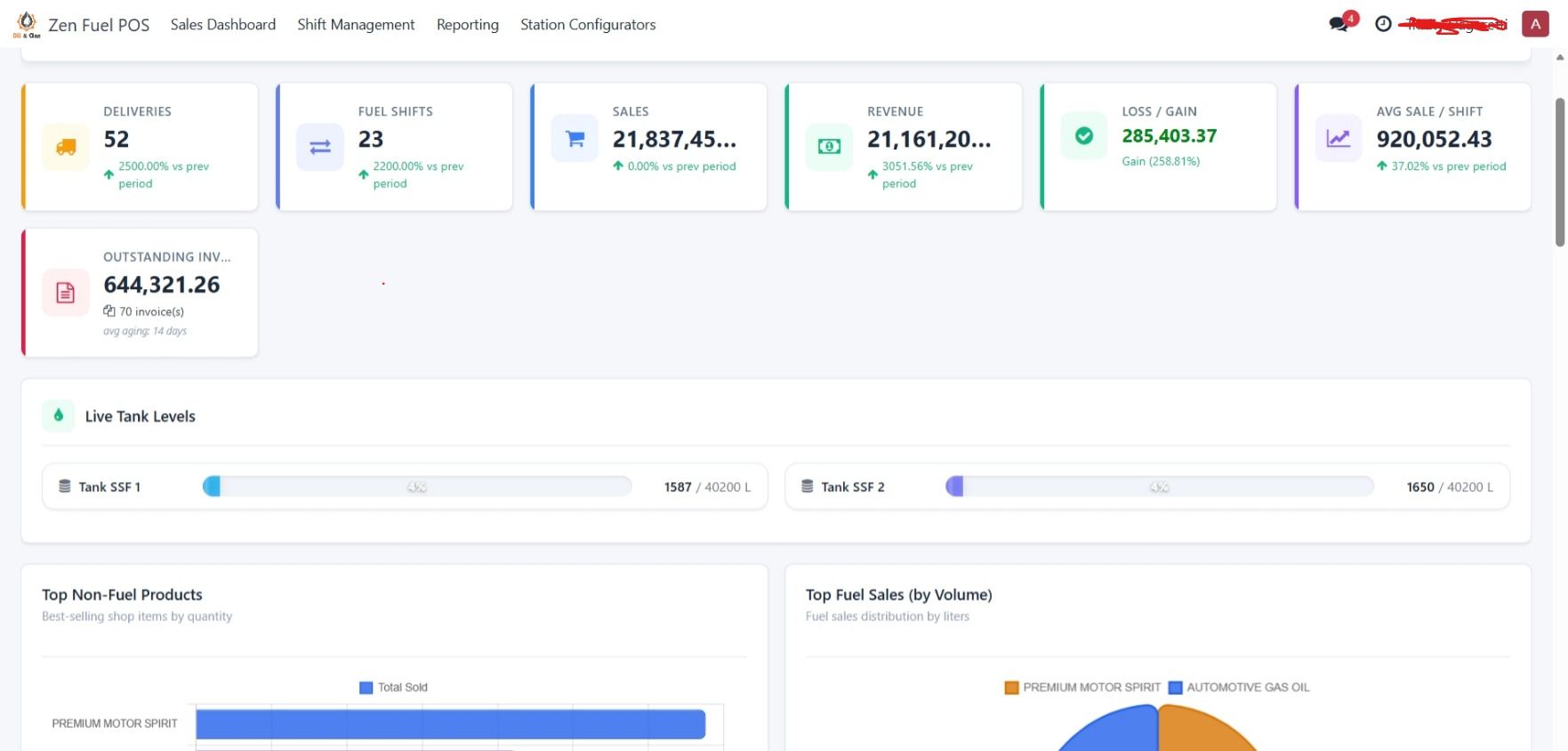
Open invoices are tracked with aging buckets — 30, 60, 90+ days. The system alerts the manager when a customer approaches their credit limit. No more "the invoice got lost in the stack."
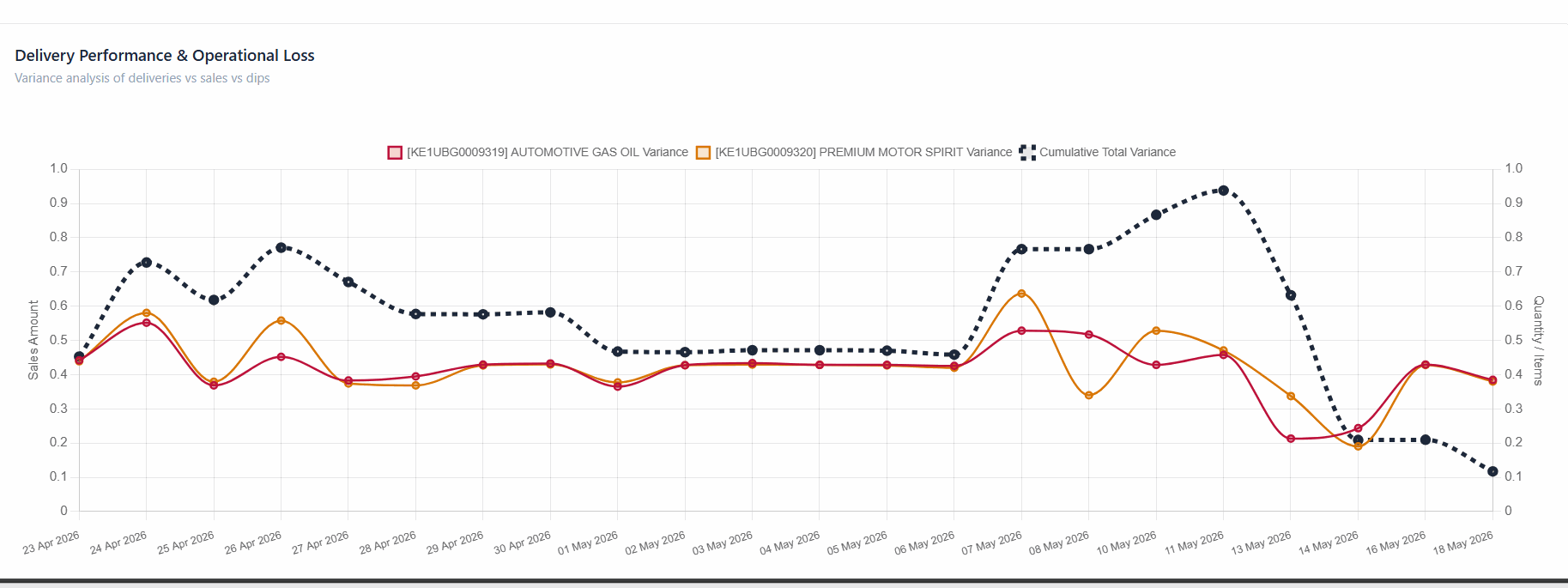
AI-Powered Operations Dashboard
This became the game-changer. We built @Kumenya an AI assistant that the station manage/Territory Managers can talk to in plain English:
"How are we doing today?"
→ Shows current sales, active shifts, tank levels, open invoices
"What's our loss analysis for this week?"
→ Returns variance trends per tank, per shift, with comparison to previous weeks
"Which customer has the oldest invoice?"
→ Pulls aging report with customer details and contact info
No menus. No complex reports. Just answers available on desktop or mobile.
The Results
After three months with the system:
| Metric | Before | After |
|---|---|---|
| Shift reconciliation time | 90 minutes | 5 minutes |
| Product loss (fuel variance) | ~3.5% per shift | ~0.2% per shift |
| Invoice processing | Manual, 2–3 day lag | Real-time, automated |
| KRA eTIMS compliance | Manual, prone to error | 100% automated |
| Customer aging visibility | Manager's memory + notebooks | Live dashboard |
| Admin time per shift | ~2 hours | ~10 minutes |
The bottom line:
KSH 180,000 per month
recovered in previously unaccounted loss, reduced admin overhead, and eliminated compliance risk.
The Station Manager's Take
"I used to dread closing a shift. Now I just check the dashboard on my phone while I'm having chai. If something's off, the system tells me before I even ask."
What This Means for Fuel Retail in Kenya
Fuel station margins are tight. The difference between profit and loss often comes down to operational control.
This deployment proves that a mid-size OMC with multiple nationwide sites and independent operators can achieve the same operational efficacy as a self-managed dealer site with affordable, proven technology that’s already running today.
The system extends to:
- Automated fuel re-ordering - alerts when stock hits reorder levels
- Fleet Customer portal - Customer to track their fleet from the portal
- Loyalty program - automated points for regular customers
- Multi-station view - for owners managing multiple sites from a single dashboard
Is Your Station Running Blind?
If any part of this story sounds familiar — if you're spending too much on reconciliation, if your variance numbers feel wrong, if KRA compliance keeps you up at night — the system exists. It works. It's running on a station just like yours.
Book a Free Consultation →